
- Details
- Hits: 4793
Station: Charlotte, MI
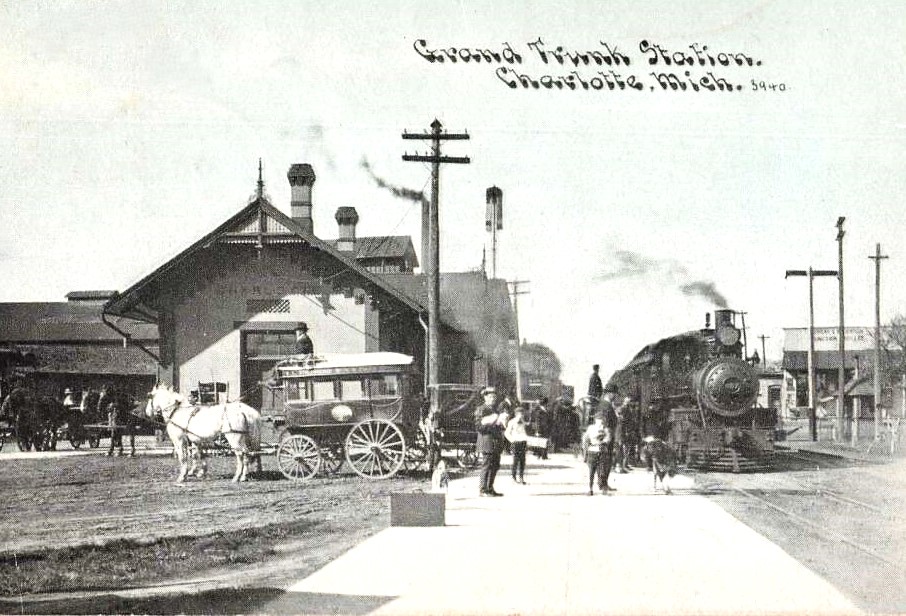
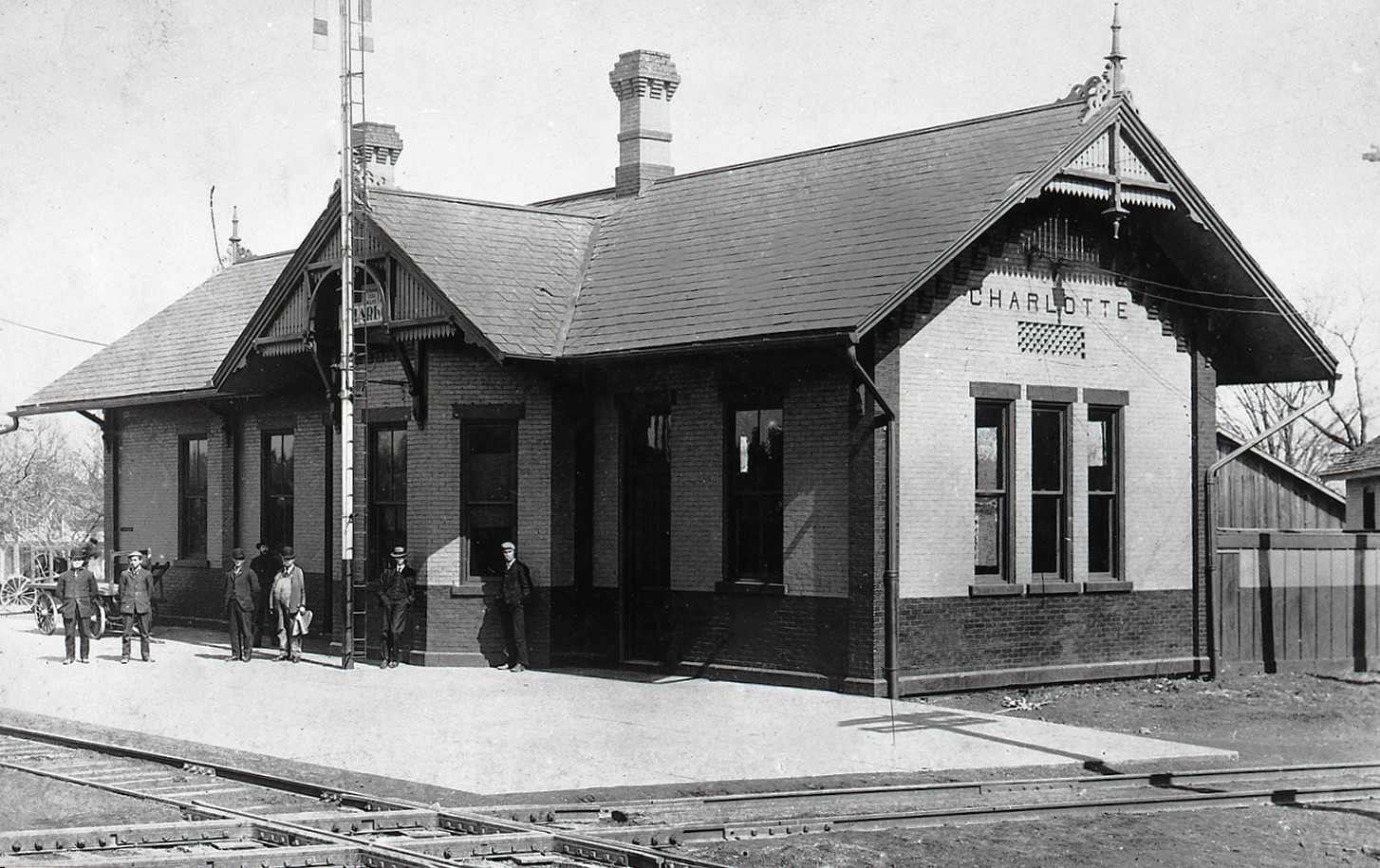
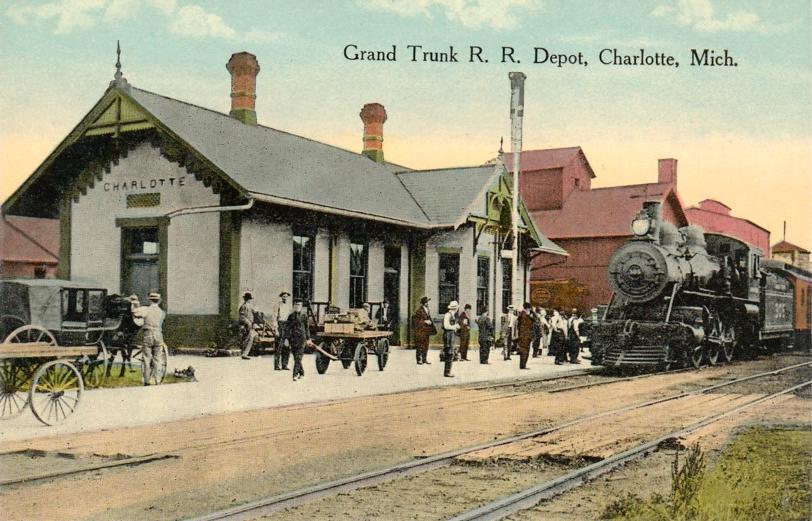
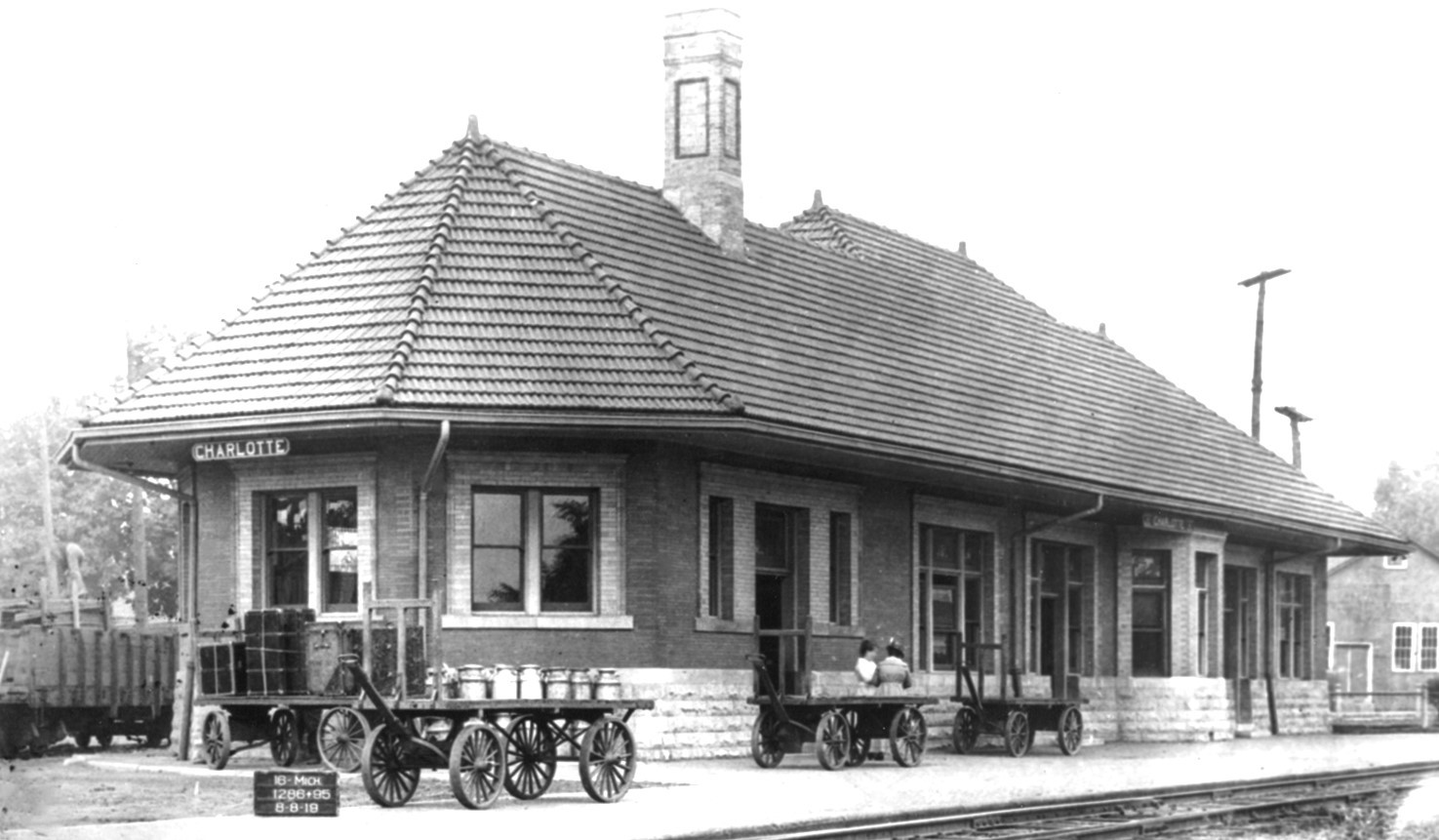
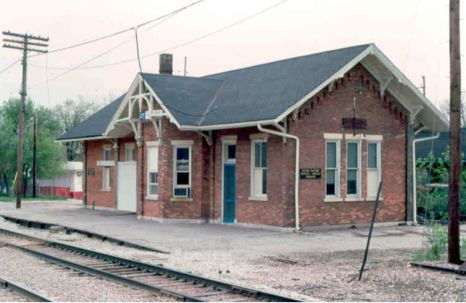 Charlotte, the county seat of Eaton County, was settled in 1832. It became a village in 1863 and a city in 1871.
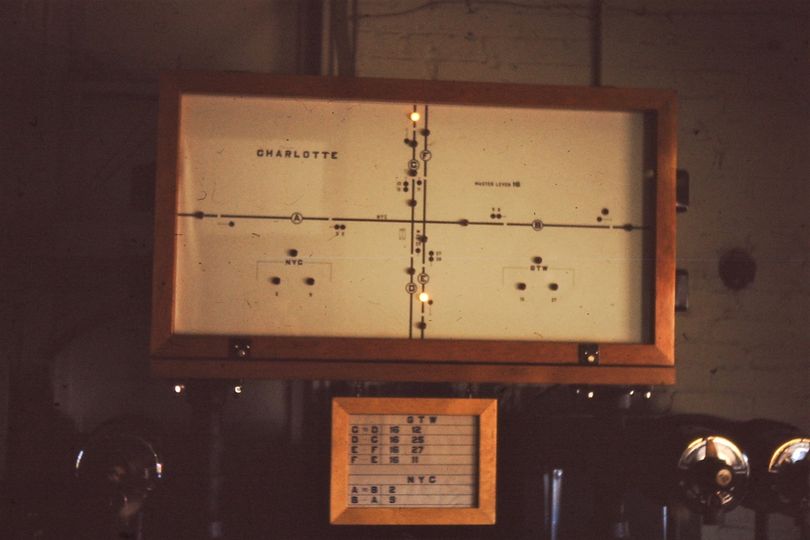
The town had two railroads and two depots. The Grand Trunk Western main line traversed the county from northeast to southwest, and the Michigan Central Grand Rapids branch came through in the opposite direction. Both lines crossed at an interlocking in Charlotte.
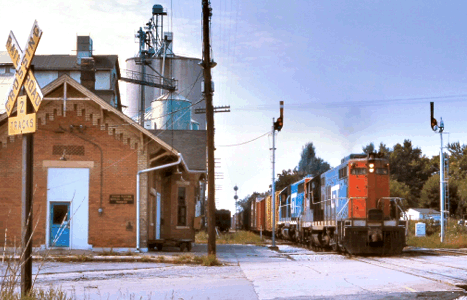
Photo info: Top, an early view of the depot at Charlotte with a GT train in the early 1900's. [David McNeill collection]. 2nd image, an early view of the union depot at Charlotte. The railroad crossing the GTW here is the Michigan Central's Jackson Branch. [CMUL]. 3rd image, a postcard view of the GTW depot at Charlotte; 4th photo an early photo of the MC depot. [CMUL][Alan Loftis Collection]. 5th photo, the GTW depot at Charlotte, which was built in 1885 and closed in 1980. The brick structure is still standing as of 2002. 1988 photo. [Charlie Whipp]. 6th photo, the MC depot, which was built in 1902. It is now a restaurant and still in good condition. [Jim Slater] 7th photo, GTW 4134 leads a freight across the interlocker at Charlotte in 1977. The semaphores are station train order signals and block signals for the GTW. The interlocking signal is about 10 car lengths back. [Rob Kitchen]. 8th photo, the model board for the crossing inside the depot, in 1967. [Charles Geletzke Jr.]
Notes
Time Line
1917. The MC had an operator-agent here around-the-clock. The Grand Trunk had a day agent here, along with telegraph operators around the clock to control the crossing. [TRT]
1923. A new interlocking is approved for service at the crossing. Passenger trains are limited to 25 mph and fright trains at 15 mph. [MPSC-1923]
Industry
- Benjamin W. Grier's saw mill - boiler explosion kills owner and engineer. [AAN-1884-0109]
.jpg "MC Charlotte MI Depot")
Bibliography
The following sources are utilized in this website. [SOURCE-YEAR-MMDD-PG]:
- [AAB| = All Aboard!, by Willis Dunbar, Eerdmans Publishing, Grand Rapids ©1969.
- [AAN] = Alpena Argus newspaper.
- [AARQJ] = American Association of Railroads Quiz Jr. pamphlet. © 1956
- [AATHA] = Ann Arbor Railroad Technical and Historical Association newsletter "The Double A"
- [AB] = Information provided at Michigan History Conference from Andrew Bailey, Port Huron, MI
Contact Us

Email: webmaster@michiganrailroads.com